

Global ABS 2026: From cautious recovery to a market focused on execution
Global ABS once again brought the structured finance community together in Barcelona, reaffirming its position as the central meeting point for the market. With nearly 6,000 delegates and consistently full sessions, the 30th anniversary edition reflected a sector that is active, engaged and increasingly focused on what comes next.
Alongside the conference itself, European DataWarehouse’s exclusive Drinks & Deals networking event offered an additional opportunity to connect in a more informal setting. With strong attendance and a lively atmosphere, it reinforced one of the core strengths of Global ABS: the ability to bring together the full securitisation community and create space for meaningful conversations and new connections.
Across three days of panels, meetings and informal exchanges, one thing became clear. The market is no longer centered on recovery. The focus has shifted to execution, how transactions are structured, how portfolios are positioned, and how participants operate in a more complex and demanding environment.
 European DataWarehouse’s exclusive Drinks & Deals networking event
Measured optimism, backed by real activity
Granular, standardised loan-level data is the foundation of effective AI adoption in securitisation. It enables more accurate risk assessment, stronger due diligence, and greater transparency for investors and regulators alike. As Europe’s first securitisation repository, EDW plays a central role in providing this trusted data infrastructure to the market.
The report highlights how access to consistent, high-quality data is essential for AI models to deliver meaningful and reliable insights, whether for analysing portfolio performance, identifying anomalies, or supporting regulatory compliance.
Key AI Use Cases in Securitisation
The overall sentiment at this year’s event was cautiously optimistic.
Busy schedules, and high engagement levels pointed to a market that is clearly open. While not all banks are equally active, participation remains broad, supported by ongoing deal flow and refinancing activity.
Investor appetite is present, but selective. Structure, transparency, and data quality continue to shape investment decisions, reinforcing discipline even as confidence improves.
Despite macroeconomic and geopolitical uncertainty, there was little sense of hesitation. Instead, conversations focused on growth opportunities, innovation, and the continued role of securitisation in financing the real economy.
A market looking to grow, within clear limits
While AI presents significant opportunities, its adoption also introduces important challenges. Data privacy and security are central concerns, particularly under regulatory frameworks such as the General Data Protection Regulation (GDPR). EDW’s loan-level data has been designed with privacy in mind, containing no personal borrower information, which helps mitigate these risks.
Model transparency and bias also remain key issues. Complex AI models can be difficult to interpret, raising concerns for investors and regulators in a market where explainability is essential. In addition, regulatory expectations are evolving rapidly, with initiatives such as the EU AI Act placing greater governance and oversight requirements on high-risk AI applications in finance. Addressing these challenges requires robust governance frameworks, explainable AI approaches, and ongoing regulatory alignment.
How EDW is Applying AI to Enhance Data Analysis
There is a clear appetite to scale the market, but also a shared recognition of the constraints. Regulation and market economics remain the key limiting factors, with somewhat different dynamics across the UK and the EU.
The ongoing revision of the EU securitisation framework was broadly seen as a step in the right direction. However, most participants agreed that it is unlikely to drive meaningful short-term expansion.
What’s Next for AI in Securitisation
Looking ahead, the report highlights how emerging technologies could further transform securitisation. Generative AI, including large language models, offers the potential to analyse unstructured data, automate reporting, and make complex loan-level insights more accessible to a wider range of stakeholders.
The integration of AI with complementary technologies such as blockchain and regulatory technology (regtech) could further enhance data integrity, security, and compliance automation. Together, these innovations point towards a more resilient, efficient, and transparent securitisation market.
At the same time, specific growth areas are emerging:
- Private credit, particularly in asset based finance and SRT transactions
- CLOs and SRT structures as some of the most active segments
- Synthetic ABS playing a growing role in supporting asset backed finance
- New asset classes such as data centres, digital infrastructure, renewable energy, and niche esoteric assets, with data centre securitisation emerging as a particularly strong growth area in Europe, following a more mature market in the US
Together, these signals point to a market that is evolving structurally, even if headline growth remains gradual.
Macro uncertainty is structural, not temporary
One of the defining perspectives from this year’s event came from Mohamed El-Erian’s keynote.
The key message was that uncertainty is no longer cyclical. It is structural. Geopolitical developments and economic volatility are persistent forces shaping the market.
For participants, this means preparing for a broader range of outcomes and focusing on adaptability rather than relying on a single base case.
Data is no longer optional. It is a competitive advantage
Data was one of the most consistent themes across sessions and conversations.
The discussion has moved beyond data availability. The real question is how effectively it can be used.
This was clearly reflected in the “The Devil is in the Data Researchers’ Roundtable”, where EDW CEO, Dr. Christian Thun, joined experts from Concept ABS, Rabobank, Moody’s Analytics, and Citi. The focus was on how loan-level data can be used to identify performance trends, detect early stress signals, and challenge assumptions.
At the same time, a broader shift is becoming visible. Data management is increasingly seen as a competitive advantage; as AI and automation evolve, the focus is shifting towards how effectively teams can use data, rather than simply having access to it.
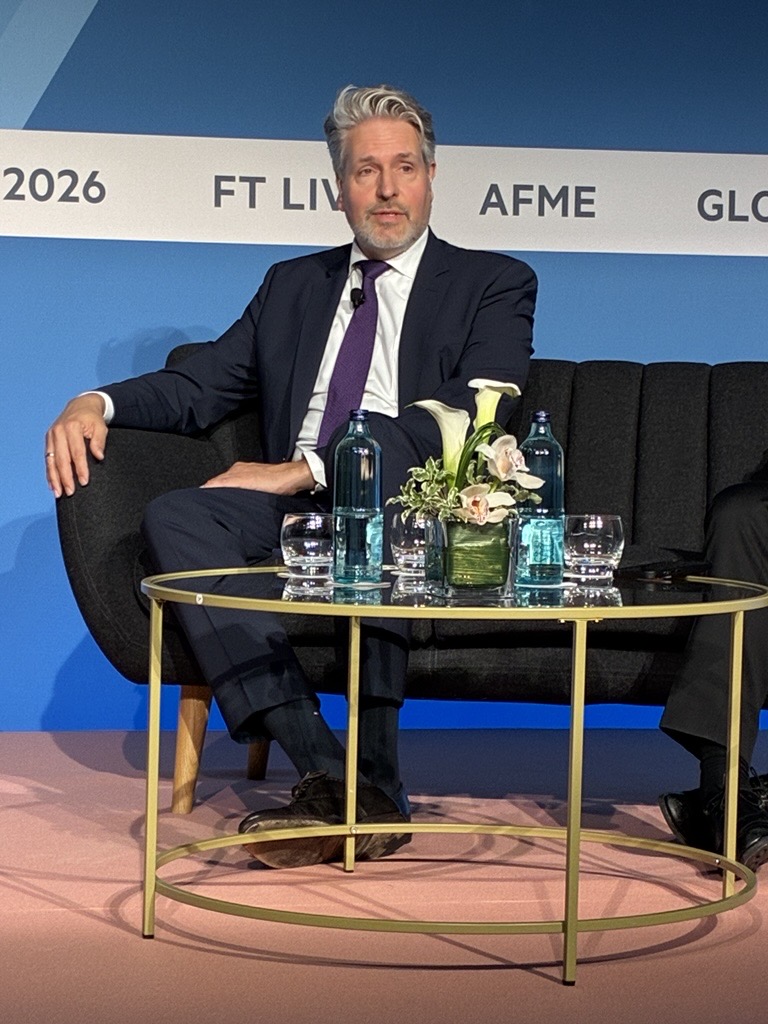
EDW CEO Dr. Christian Thun
Efficiency, automation and AI move up the agenda
Alongside data, efficiency was one of the most prominent themes.
Market participants are actively looking to reduce operational friction, simplify access to data, automate workflows, and enable faster and more reliable decision making.
There is growing interest in AI-driven processes, particularly in credit analysis and lending workflows. Automation is gradually becoming embedded as a way to enhance expertise.
Execution is becoming the new bottleneck
As activity increases, attention is shifting from whether deals can be done to how efficiently they can be executed.
Coordination, document management and control over deal information are becoming critical components of performance.
This was reflected in many conversations at the EDW booth. DealDox® resonated strongly with participants looking for more structured ways to manage deal documentation and workflows.
A fully connected ecosystem
Global ABS remains one of the few events where the entire securitisation ecosystem gathers in one place.
Investors, issuers, arrangers, servicers, data providers, technology firms, and regulators all operate side by side, creating a unique environment for exchange.
Many conversations focused on strengthening relationships and identifying future opportunities rather than immediate transactions.
Internationalisation and new participants
Another notable trend this year was the increasing international presence.
There was stronger participation from regions such as Australia, Japan and Korea, reflecting the growing global relevance of the securitisation market.
Resilience alongside risk awareness
While sentiment was positive, risk remains firmly in focus.
Fraud concerns and recent disruptions were acknowledged, but they did not dominate the narrative. The market appears to be adapting with increased discipline in risk selection.
On the ground: engagement and a familiar highlight
At the EDW booth, conversations remained lively throughout the event. DealDox demonstrations sparked focused discussions focused on workflow efficiency and control.
The claw machine returned once again, featuring the now familiar Barbies and introducing footballs inspired by the upcoming World Cup, attracting a constant flow of visitors.

Looking ahead
Global ABS 2026 confirmed that the structured finance market is entering a new phase.
- Activity is returning
- Confidence is improving
- Execution is becoming central
- Data is foundational
- Efficiency is rising in importance
- Uncertainty is structural
The question is no longer whether the market will recover. It is how participants position themselves to operate in a more active, more complex, and more demanding environment.
Want to keep up with the latest insights from the structured finance market?
Subscribe to our newsletter to receive research, regulatory updates, and market analysis directly in your inbox.
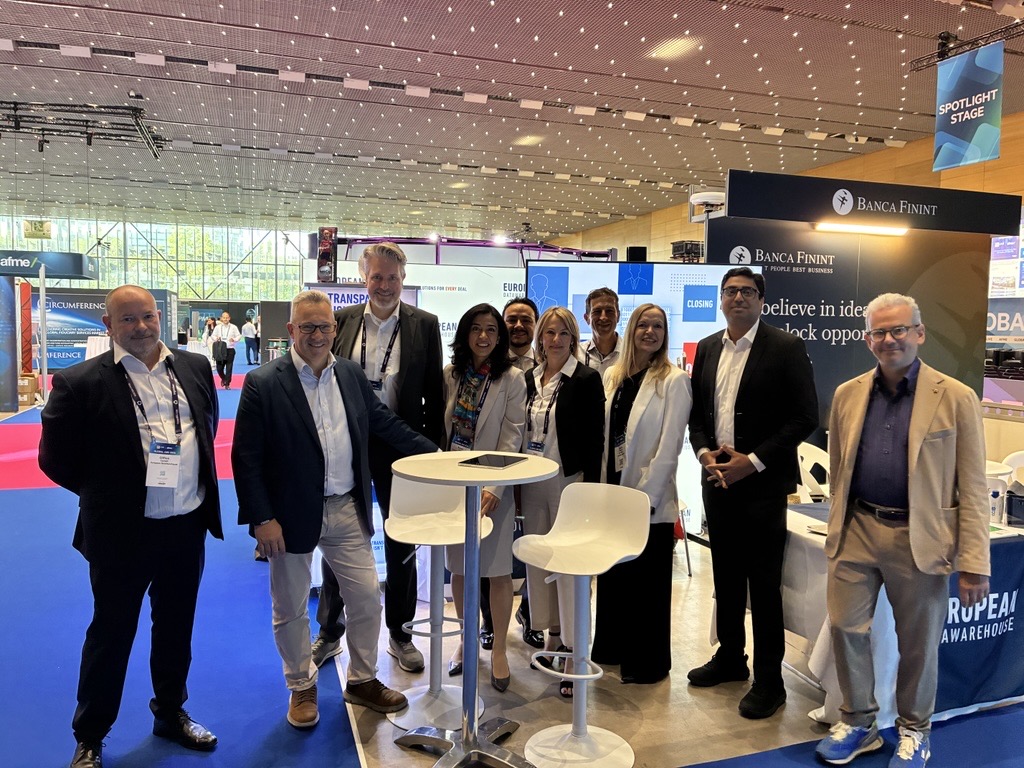
The EDW team is already looking forward to Global ABS 2027!
|
Want to keep up with the latest insights from the structured finance market?